What a PMP Certified Project Manager Brings to a Software Project
A PMP certified project manager brings structure and accountability to software projects, cutting risk and keeping timelines honest.
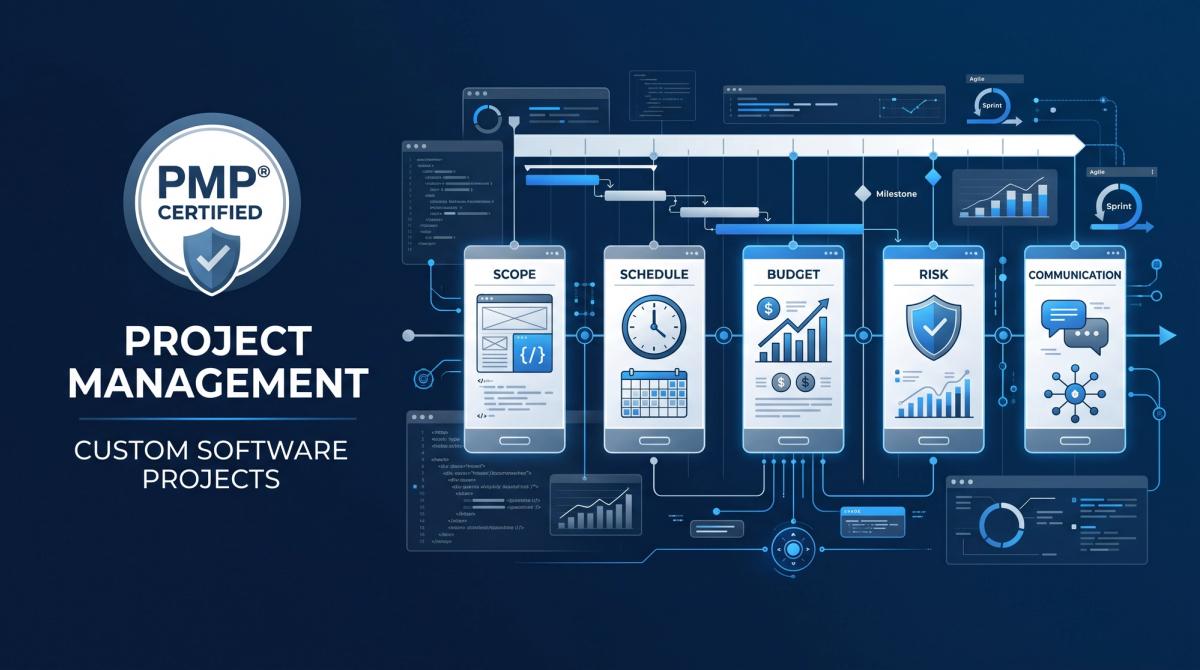
A PMP certified project manager brings a specific kind of discipline to software projects that most teams don't have in house. That distinction matters more than it sounds, because a lot of custom software work fails not because the code is bad, but because nobody was tracking scope, budget, or risk closely enough to catch problems before they became expensive.
What Does a PMP Certified Project Manager Do on a Software Project?
PMP stands for Project Management Professional, a certification from the Project Management Institute that requires years of documented project experience plus a rigorous exam covering scheduling, risk, budgeting, stakeholder communication, and process discipline. It's not a course you take over a weekend.
On a software project, that translates into someone who builds a real schedule with dependencies mapped out, tracks a budget against actual progress instead of guesswork, and flags risks before they turn into missed deadlines. It's less about writing code and more about making sure the people writing the code are working on the right things, in the right order, without surprises three months in.
Why Custom Software Projects Go Off the Rails Without One
Most software projects don't fail because of a single bad decision. They fail through a slow accumulation of small ones: a feature added without anyone recalculating the timeline, a client request that quietly expands the scope, a risk that everyone noticed but nobody owned.
Without a dedicated project manager, that job usually falls to whoever is closest, often a developer or a founder who is already stretched thin. Developers are good at solving technical problems. They are not always the right person to be managing budget variance or renegotiating scope with a client, and asking them to do both at once tends to slow down the actual work.
The Core Areas a PMP Certified Project Manager Actually Manages
- Scope: defining what's in the project and, just as important, what isn't
- Schedule: building a realistic timeline with dependencies, not just a launch date
- Budget: tracking spend against progress so cost overruns get caught early
- Risk: identifying what could go wrong before it does, and having a plan ready
- Communication: keeping the client, developers, and stakeholders aligned on status and decisions
None of this is glamorous. It's also the difference between a project that ships on time and one that quietly slips a month at a time until everyone stops asking when it's due.
A good project manager doesn't make a project move faster. They make sure it doesn't stall without anyone noticing.
How This Shows Up at Resilio Partners
Resilio Partners is built around fixed-price, project-based work, which only functions if the scope and schedule are locked down from the start. Jon Irwin, the firm's founder, is a PMP-certified Air Force veteran, and that background shapes how projects get run: clear milestones, defined deliverables, and no scope creep disguised as flexibility.
That structure is also what makes fixed-price billing possible in the first place. A vague scope leads to vague pricing. A managed one, tracked by someone certified to manage it, is what allows a firm to quote a price and hold to it.
Is a PMP Certified Project Manager Worth It for a Small Business Project?
For a small or mid-sized business evaluating a custom software project, the value of a PMP certified project manager isn't a title on a resume. It's the reduced odds of paying for a project that drags on past its deadline or drifts past its original budget because nobody was tracking either one closely.
If you're comparing consulting firms or in-house hires for a software build, ask who is managing the project day to day and what their background is. A PMP certified project manager on a software project won't guarantee a perfect outcome, but it puts someone in the room whose job is specifically to catch problems before they cost you time or money.
Frequently Asked Questions
What does PMP stand for?
PMP stands for Project Management Professional. It is a certification from the Project Management Institute that requires years of documented project experience and an exam covering scheduling, risk management, budgeting, stakeholder communication, and process discipline.
What does a PPMP-certifiedproject manager do on a software project?
They build a real schedule with dependencies mapped out, track the budget against actual progress, and flag risks before they turn into missed deadlines. The role is less about writing code and more about making sure the people writing the code are working on the right things, in the right order.
Why do custom software projects fail without a project manager?
Most fail through a slow accumulation of small decisions, such as a feature added without recalculating the timeline, a client request that quietly expands the scope, or a risk everyone noticed but nobody owned. Without a dedicated project manager, those tasks usually fall to a developer or founder who is already stretched thin.
What areas does a PMP-certified project manager manage?
Five core areas: scope, schedule, budget, risk, and communication. Together they keep a project's boundaries clear, its timeline realistic, its spending visible, its problems anticipated, and everyone aligned on status and decisions.
How does PMP experience support fixed-price work at Resilio Partners?
Resilio Partners does fixed-price, project-based work, which only functions when scope and schedule are locked down from the start. Founder Jon Irwin is a PMP-certified Air Force veteran, and that background shapes how projects run, with clear milestones and defined deliverables. A managed scope is what allows a firm to quote a price and hold to it.
Is a PMP-certified project manager worth it for a small business software project?
The value is in the reduced odds of a project dragging past its deadline or drifting past its budget because nobody was tracking either. A PMP-certified project manager won't guarantee a perfect outcome, but they put someone on the project whose job is to catch problems before they cost you time or money. When comparing firms, ask who manages the project day-to-day and what their background is.
AI Transparency: This article was drafted with the assistance of AI and reviewed, edited, and shaped by the author’s own opinions and experience.